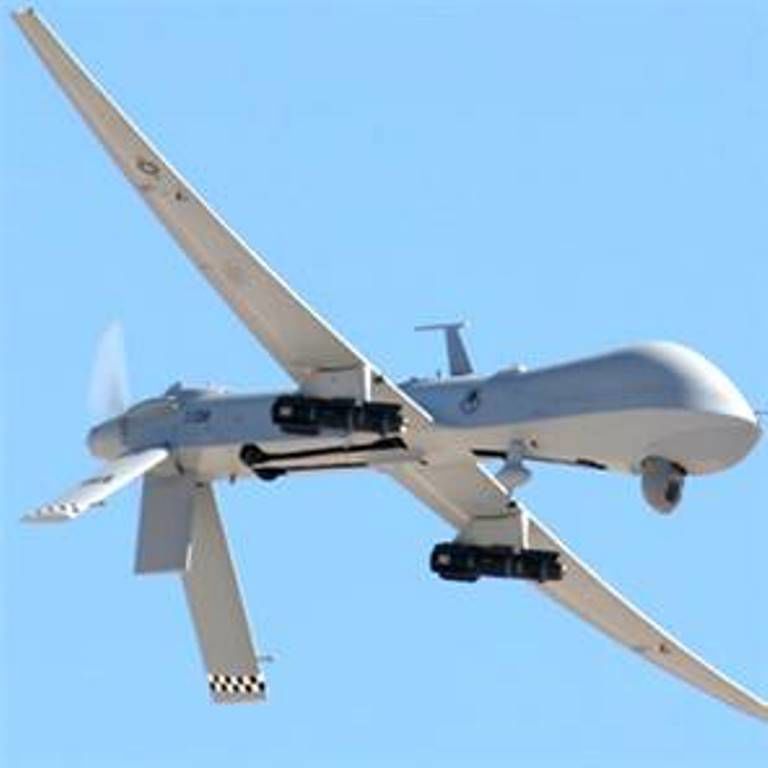
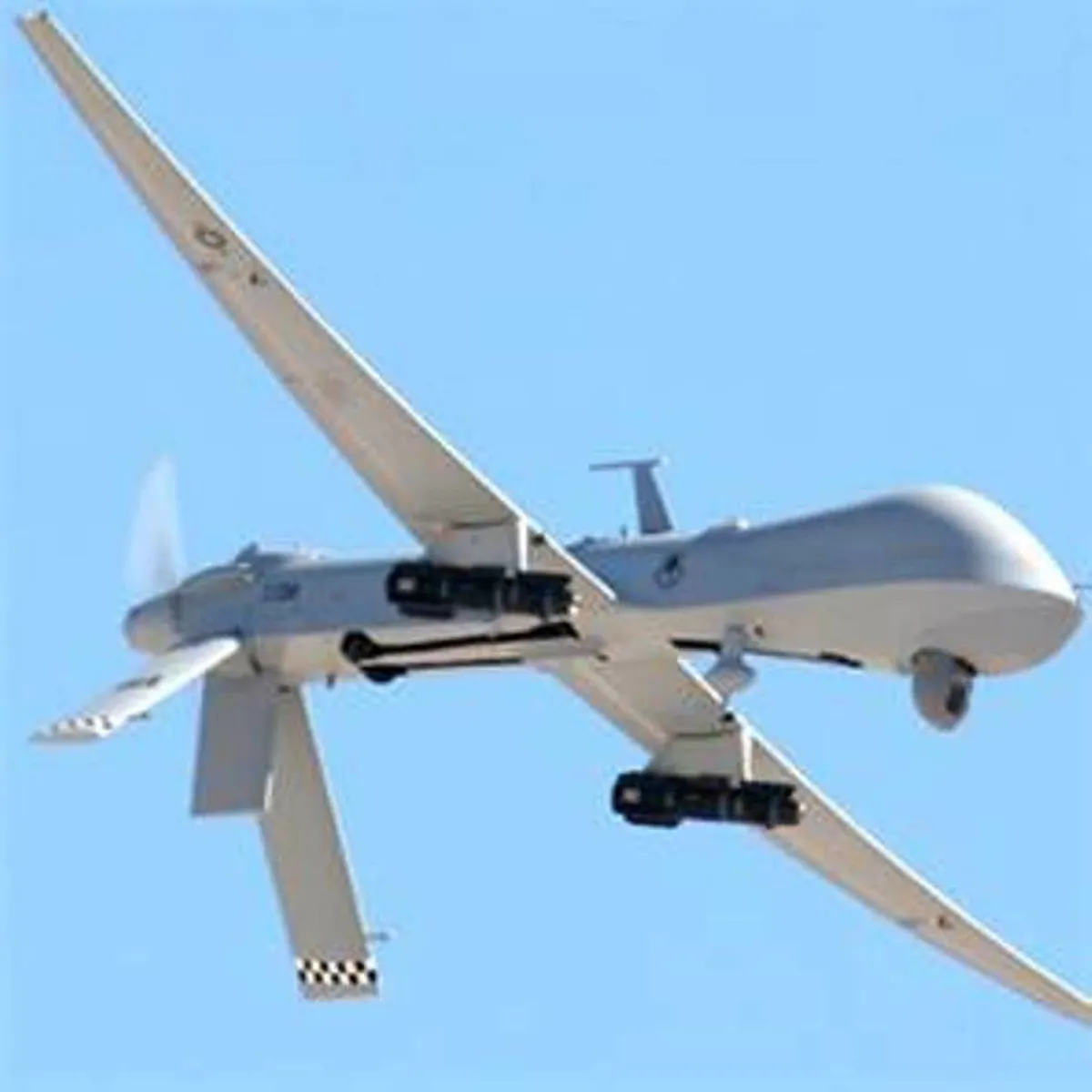
The unmanned aerial vehicle (UAV), designed by TUSAŞ engineers and manufactured entirely in Turkey, was rolled out of the hangar.
The unmanned aerial vehicle (UAV), designed by TUSAŞ engineers and manufactured entirely in Turkey, was rolled out of the hangar.
The 100% Turkish-made Unmanned Aerial Vehicle (UAV), designed by TUSAŞ engineers, was rolled out of the hangar. An information meeting on Unmanned Aerial Vehicle (UAV) systems was held, along with a roll-out ceremony for the Turkish-designed UAV. Ten of these UAVs, manufactured by TAI, will be completed in August.
The launch event was attended by Chief of General Staff General İlker Başbuğ and numerous force commanders. During the program, the engine of the domestically produced UAV was started to the sound of applause, and General Başbuğ and Minister Vecdi Gönül inspected it. A night vision camera will be added to the UAV in 2011. The design, detailed production, and assembly of the unmanned aerial vehicle, classified as a "medium altitude, long flight duration" aircraft, were completed some time ago. Officials emphasized that the TİHA weighs 1.5-2 tons and will gradually achieve the capability of remaining airborne for 24 hours and climbing to an altitude of 30,000 feet. Initially, the TİHA will reach 23,000 feet and remain airborne for 18 hours. Later, it will reach 30,000 feet and remain airborne for 24 hours. The TİHA has a wingspan of 17 meters, a length of 9 meters, and a height of 1.70 meters. Plaques were awarded to those who contributed to the production of the first domestically produced unmanned aerial vehicle. Speaking at the ceremony, Minister of National Defense Gönül stated that they are now reaping the concrete results of the priority given to domestic design and production, saying, "In the current period, the Turkish Armed Forces have begun to receive mine-resistant armored vehicles, all types of combat ships, command and control systems, electronic warfare systems, and mini unmanned aerial vehicles designed and produced in our country. As a result of these efforts, the domestic contribution rate of the sector has doubled to 45.7%, its turnover has tripled to 2.3 billion dollars, its exports have quadrupled to 830 million dollars, and its annual R&D expenditures have increased tenfold to 500 million dollars." It was noted that the vehicle runs on jet fuel. The statement indicated that while the Heron drones cost 60 million dollars, the UAVs are cheaper than the Heron drones.