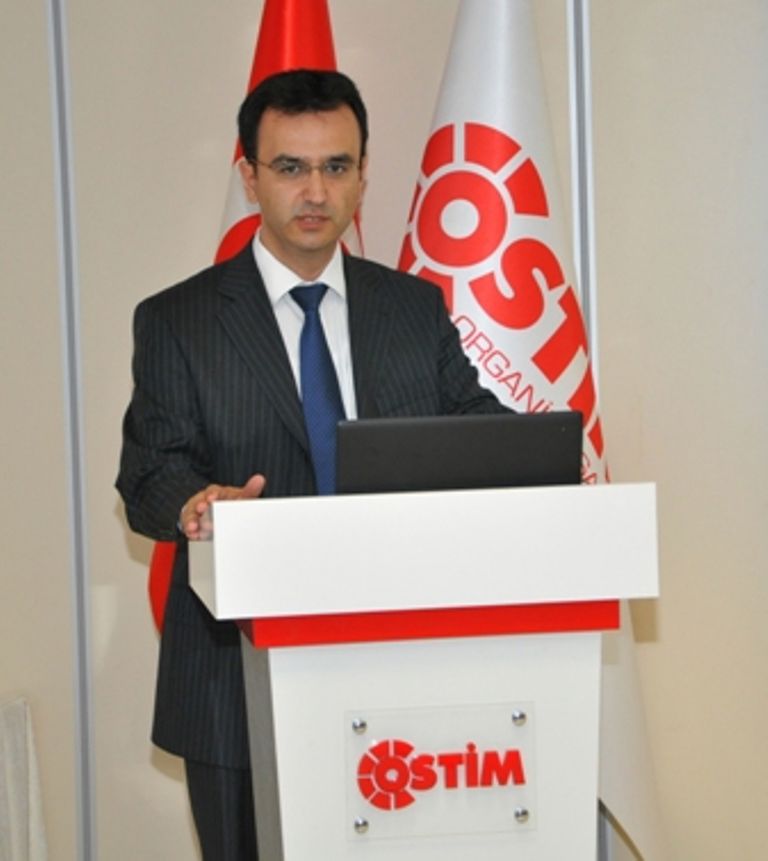
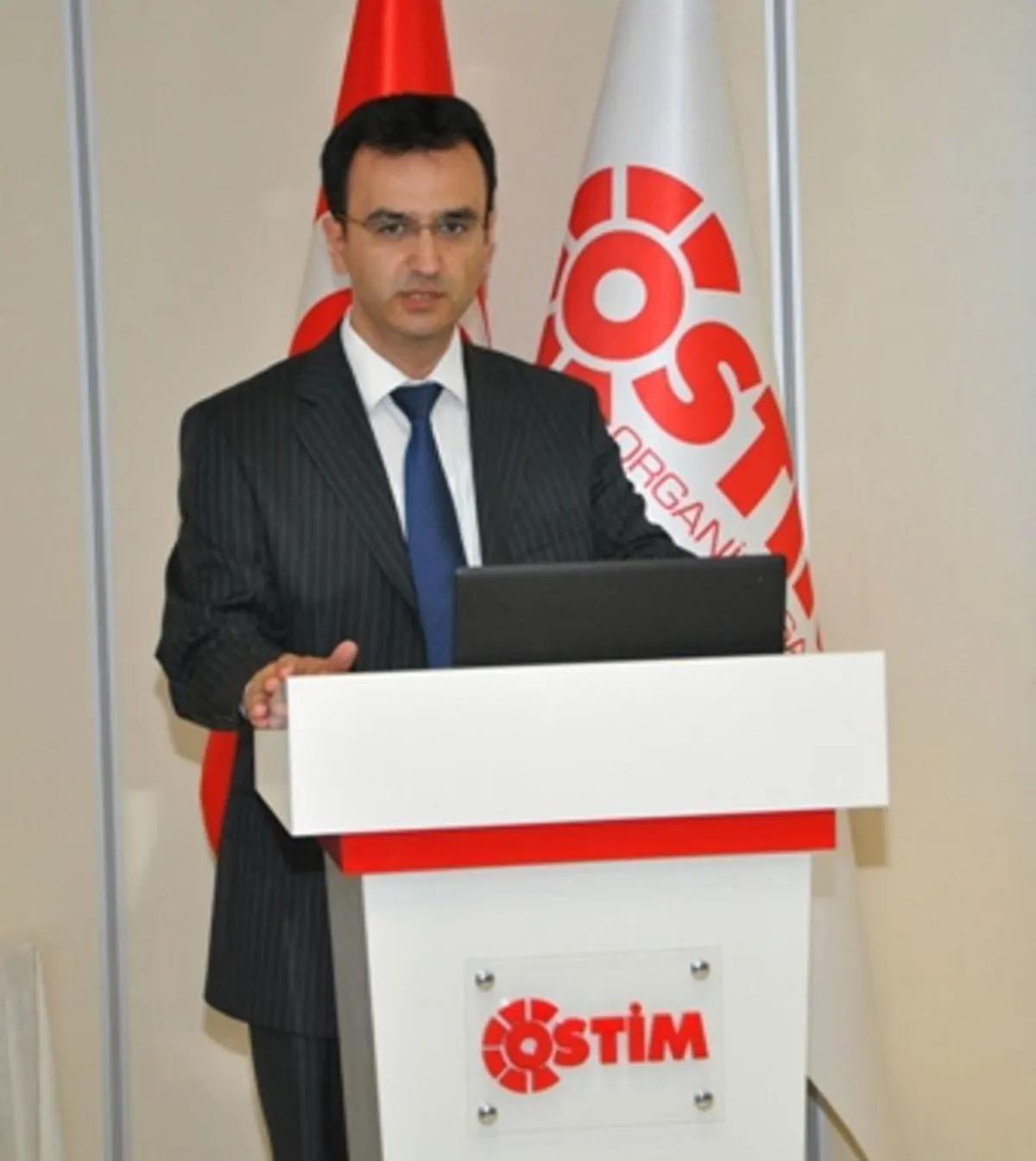
Bilal Aktaş, Head of the Industrialization Department at the Undersecretariat of Defense Industry, visited OSTİM Organized Industrial Zone, home to some of the most important subcontractors of the defense industry. During his visit, he toured several companies and examined their production capabilities on-site, stating, "OSTİM means solutions for us."
Bilal Aktaş, Head of the Industrialization Department at the Undersecretariat of Defence Industry, visited the OSTİM Organized Industrial Zone (OSTİM Defence and Aerospace Cluster - OSSA), where the most important sub-suppliers of the Turkish defence industry are located and a successful clustering effort is underway. Aktaş, who was welcomed by OSTİM OSB President Orhan Aydın, OSTİM Defence and Aerospace Cluster Association President Mithat Ertuğ, and representatives of OSSA member companies, began his speech by saying, "OSTİM means solutions for us." Aktaş continued, "OSTİM companies have now reached the capability to produce any product they see. For this reason, we consider OSTİM our backyard." Aktaş stated that OSTİM has become a force pushing the public sector towards domestic production, saying, “Our Undersecretariat has made domestic production its mission for years. Currently, domestic projects like ANKA and ATAK are in the prototype production phase. We anticipate that mass production of these systems will begin around 2016. We will need OSTİM even more in terms of mass production. As the Undersecretariat, we are as protective as possible towards the sub-industry SMEs that support the defense industry, and we are constantly thinking about how we can provide more support. When our Undersecretariat awards contracts to our main contractors, it requires that 70% of the work be domestically produced. We also set conditions that at least 30% of this 70% must be given to sub-industries, and 15% of that must be given to SMEs, and we follow these conditions very closely.”
Aktaş stated that in some areas they are pushing main contractors to support subcontractors, saying, “For example, we no longer want to see machining at TAI. If we look at Boeing today, we see that they have outsourced all their subsystems to subcontractors. They are focusing their activities on integration and design. We also want to see our main contractor companies in this position.”
"We can export our SMEs"
Aktaş also underlined that as products manufactured by the Turkish defense industry began to be used by our armed forces, they saw very good demand from abroad, and in this sense, as the market expands, the capacity of the sub-industry will inevitably expand proportionally.
Aktaş stated that many of our defense industry products are now being exported, and highlighted a problem encountered in this regard: “Our defense industry companies face offset regulations in the countries they export to. Just as we tell foreign companies that they must produce a certain percentage of their products in Turkey when they take on a project from Turkey, the same is expected from our companies in foreign countries. Considering that some countries lack sufficient defense industry infrastructure, investing in that country can be a solution for our exporting companies. We have companies in OSTİM that are implementing this practice, and I see it as a very successful initiative.”
"The defense industry is the sector that best implements OFFSET in our country."
Aktaş stated that when looking at public procurement, defense industry purchases come after communications, energy, health, telecommunications, and transportation, adding, “It used to be said that ‘Turkey is 90% dependent on foreign countries in the defense industry.’ Today, the rate of meeting our sector's needs from abroad has fallen to 54%.” Aktaş continued: “Following this development, and with the instruction of our Prime Minister, work has begun to adapt the same application to other sectors, just as this success achieved in the defense industry was. We have initiated a study with the institutions in these sectors. Sub-working committees have been formed under the leadership of our institution. We are trying to inform the public about how these offset applications can be implemented and what our experiences are. As a result of these studies, the Ministry of Health, which changed its organizational law, has implemented the clearest application. The Ministry of Health has set a target of implementing offset applications in at least one project by the end of this year. The Ministry of Transportation, with the contribution of OSTİM's work, has also included a 51% domestic content requirement in the Ankara metro tender specifications.”